
It’s the first question almost every client asks us: timber or composite? Both make a great deck. They just suit different people, different yards and different amounts of weekend work. Here’s how they compare on the things that actually matter in Sydney.
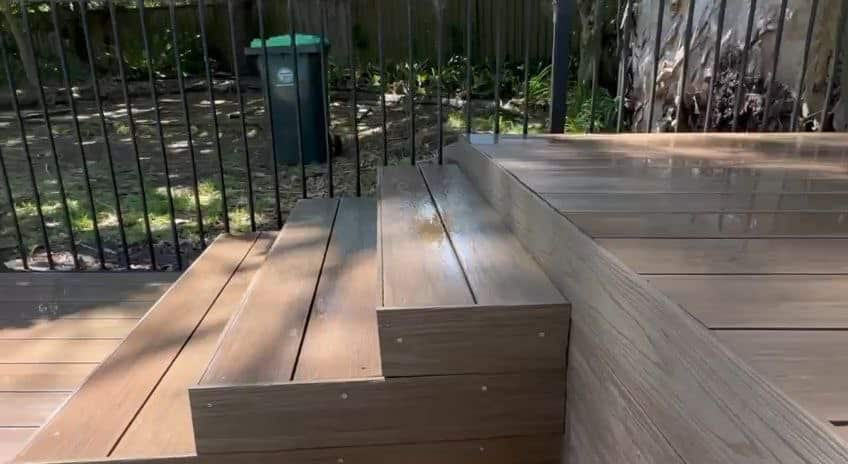
Quick comparison
| Hardwood timber | Composite | |
|---|---|---|
| Look | Natural grain, every board different | Consistent colour, timber-look finishes |
| Maintenance | Oil or stain regularly to keep the colour | Wash down, no oiling or sanding |
| Heat underfoot | Stays comparatively cool | Can get warm in full sun, more so in dark colours |
| Splinters | Possible as boards weather | None |
| Colour over time | Weathers to silver grey if not oiled | Stable, small change in the first months |
| Repairs | Sand, oil, replace single boards | Replace single boards (same product line) |
| Bushfire-prone land | Species and BAL rating matter | Product must be rated for your BAL |
Heat underfoot
On a hot Sydney summer afternoon, deck temperature matters, especially with kids, dogs and a pool.
Timber generally stays more comfortable in full sun. Composite boards hold more heat, and dark colours get noticeably hotter than light ones. If your deck faces north or west with no shade, choose a lighter composite, plan shade (a pergola or shade sail), or consider timber.
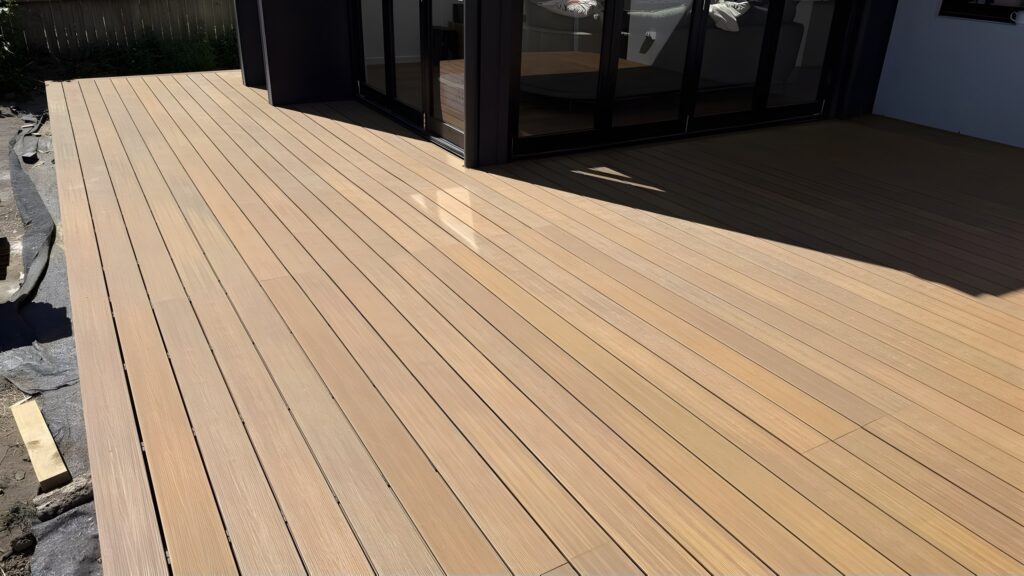
Maintenance
This is where composite wins for most people.
- Timber needs cleaning and oiling to keep its colour. Skip it and the boards go silver grey. Some people love that look, but the surface also dries out and can split or splinter over time.
- Composite needs a wash with soapy water and a soft broom. No oiling, no sanding, no staining.
If you’d rather spend weekends using the deck than oiling it, composite makes sense.
Look and feel
Nothing looks quite like real hardwood. Spotted Gum, Blackbutt and Merbau each have their own colour and grain, and no two boards match.
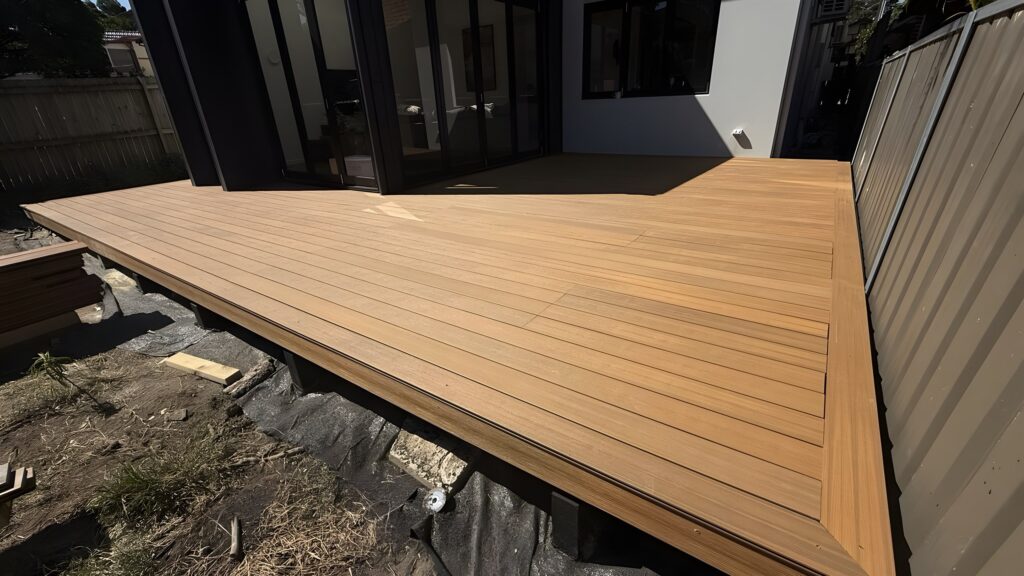
Modern composite has come a long way. Timber-look boards with a brushed grain (like the boards on our Five Dock deck) look convincing, especially with a picture-frame border. Up close it still reads as composite, so it comes down to taste.
Lifespan and cost over time
A well-built hardwood deck that’s cared for lasts many years. Composite boards often come with long manufacturer warranties. Check the warranty for the exact product, because it varies by brand and range.
Composite usually costs more up front than timber. Over time you save on oil, stain and weekend hours. We break this down in Is composite decking really worth the price?.
Whichever boards you choose, the subframe underneath decides how long the deck lasts. Composite boards need closer joist spacing than most timber boards, and both need airflow and drainage underneath.
Pools, slopes and bushfire zones
- Pool surrounds. Composite doesn’t splinter and handles pool water well. Choose a textured, slip-resistant finish.
- Sloping blocks. Both work. The subframe and footings are where the slope gets solved.
- Bushfire-prone land. Your block may have a Bushfire Attack Level (BAL) rating. Only certain timber species and composite products are rated for higher BAL levels. Check before you choose.
Which should you choose?
Choose timber if you love natural grain, want a cooler surface in full sun, and don’t mind oiling.
Choose composite if you want low maintenance, no splinters, consistent colour and a deck around a pool or play area.
Still unsure? We build both. Read more about timber decking in Sydney, or see our decking services and book a free on-site visit. We’ll bring samples of both. Call 0475 424 078.
Frequently asked questions
Does composite decking get too hot in Sydney?
It can get warm in direct afternoon sun, especially darker colours. Lighter colours and shade make a big difference.
Can you mix timber and composite?
Yes. For example, composite boards on a hardwood or steel subframe, or timber steps with a composite deck. We’ll advise what works for your design.
Hollow or solid composite boards?
We compare them in this guide.