
A good shed clears the clutter out of the garage and the side passage. A bad one leaks, rusts at the base, or sits where you can’t open the door. Get these four things right and it’ll do its job for years.
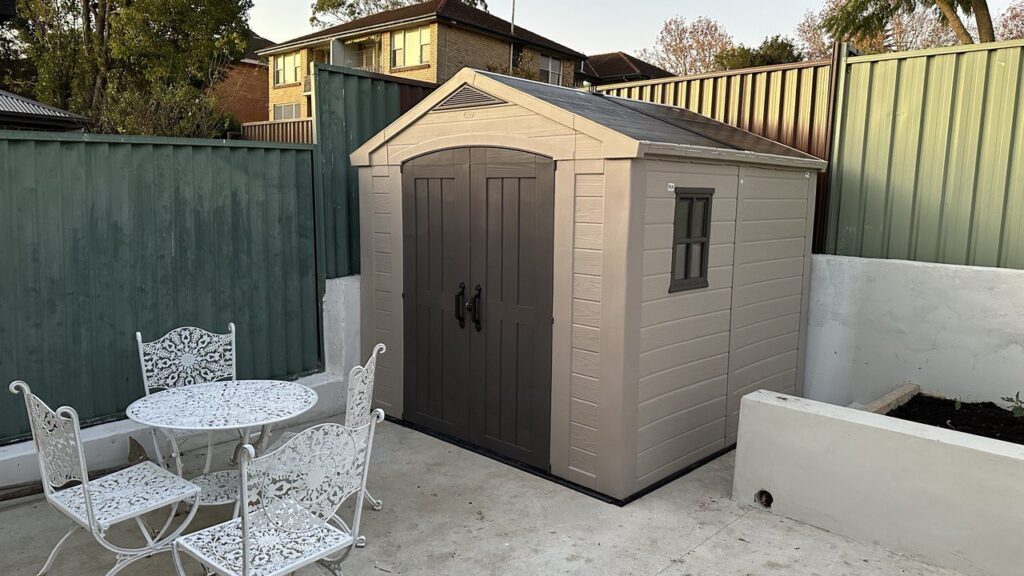
1. What size do you need?
Make a list of what’s going in: mower, bikes, tools, pool gear, garden furniture cushions. Then add room to walk in and reach the back.
- Small (around 1.5 m × 1 m): garden tools and a few bags of potting mix.
- Medium (around 2–3 m wide): mower, bikes, tools and shelving.
- Large (3 m+): workshop space or storage for bulky outdoor furniture.
Check the council limits in step 4 before you settle on a size. The NSW exempt limit is 20 m² on most residential land.
2. Concrete slab or shed base?
The base decides whether the shed stays square, dry and rust-free.
- Concrete slab. The strongest, flattest option. Best for larger sheds, workshops and anything heavy. Built slightly larger than the shed with a fall so water runs away.
- Steel or timber base frame. Good for smaller sheds, or where a slab isn’t practical. It must be level and off the damp ground.
On a sloping block, a small retaining wall or cut-and-level may be needed first.
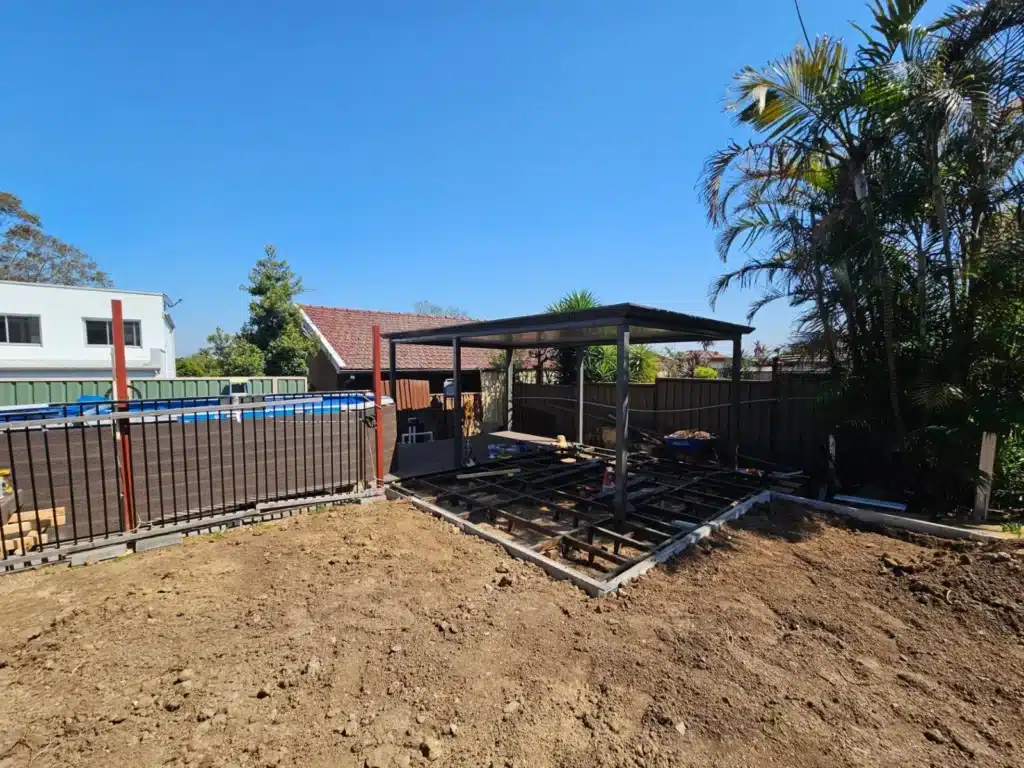
3. Where should it go?
- Access. Can you wheel the mower in without crossing the lawn in the wet?
- Door direction. Face the door toward your path, not the fence.
- Drainage. Avoid low spots where water collects after rain.
- Easements and pipes. Keep clear of sewer lines and easements.
- Neighbours. Roof water must run away without causing a nuisance next door.
4. Does a garden shed need council approval in NSW?
Many garden sheds are exempt development, so no council approval is needed, if they meet the state rules. On most residential land the main standards include:
- floor area no more than 20 m²
- no higher than 3 m above existing ground level
- at least 900 mm from each lot boundary
- behind the building line of any road frontage (not in the front yard)
- at least 1 m from any registered easement
- metal parts in low-reflective, factory pre-coloured materials
- roof water disposed of without causing a nuisance to neighbours
- not a shipping container, and not habitable
- in a heritage conservation area, located in the rear yard
- no more than 2 such structures per lot
Sheds on heritage items, foreshore land or environmentally sensitive land aren’t covered by the exempt rules. Bigger sheds, or sheds closer to the boundary, usually need a Complying Development Certificate or a DA.
General information only, based on the NSW State Environmental Planning Policy (Exempt and Complying Development Codes) 2008, clause 2.18. Confirm for your property.
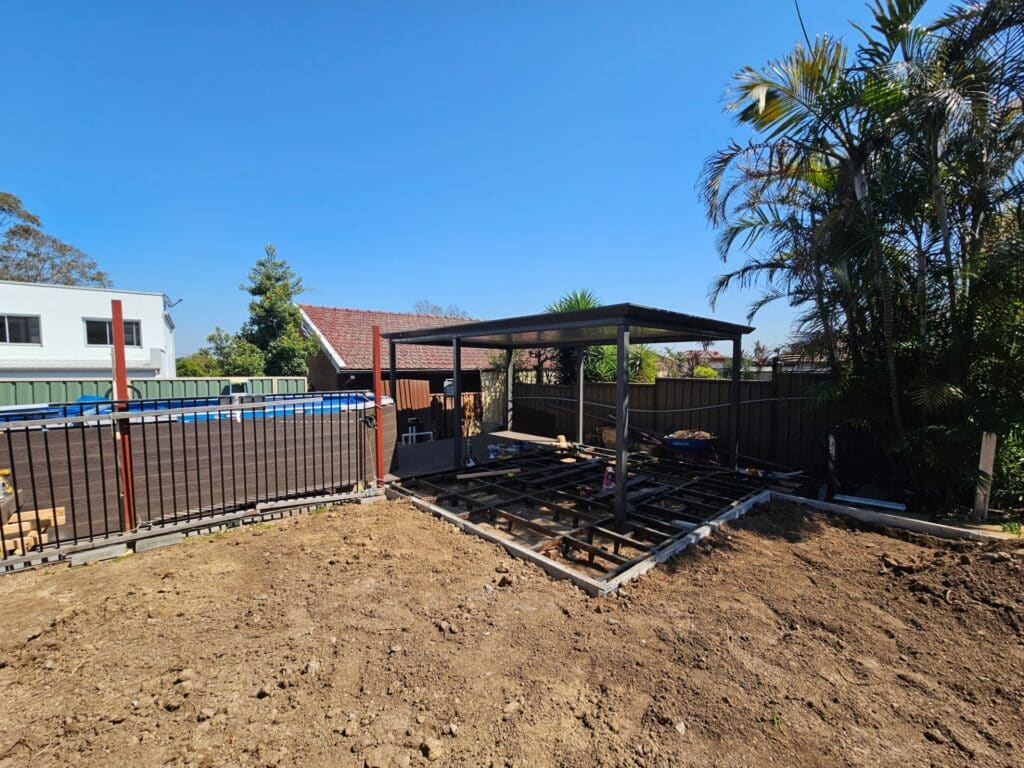
Shed, pergola and carport together
Many clients combine a shed with a pergola or carport so the backyard works as one plan. See our pergola, carport and garden shed installation service, or call 0475 424 078 for a free on-site visit.
Frequently asked questions
Can a shed go right against the fence?
Under the exempt rules on most residential land, a shed must be at least 900 mm from each boundary. Closer usually needs approval.
How long does a shed installation take?
It depends on size and whether a slab is needed, because a new slab needs time to cure.
Source: NSW Legislation, State Environmental Planning Policy (Exempt and Complying Development Codes) 2008, clauses 1.16 and 2.17–2.18 (version in force from 11 September 2026, accessed 29 September 2026). This article is general information only and is not legal advice. Rules can change, so check the current legislation or with your council before you build.