
We build sandstone block walls, cladding and garden edging across Sydney. It’s the stone this city was built out of, and it still makes a frontage look like it’s been there forever.
What sandstone actually is
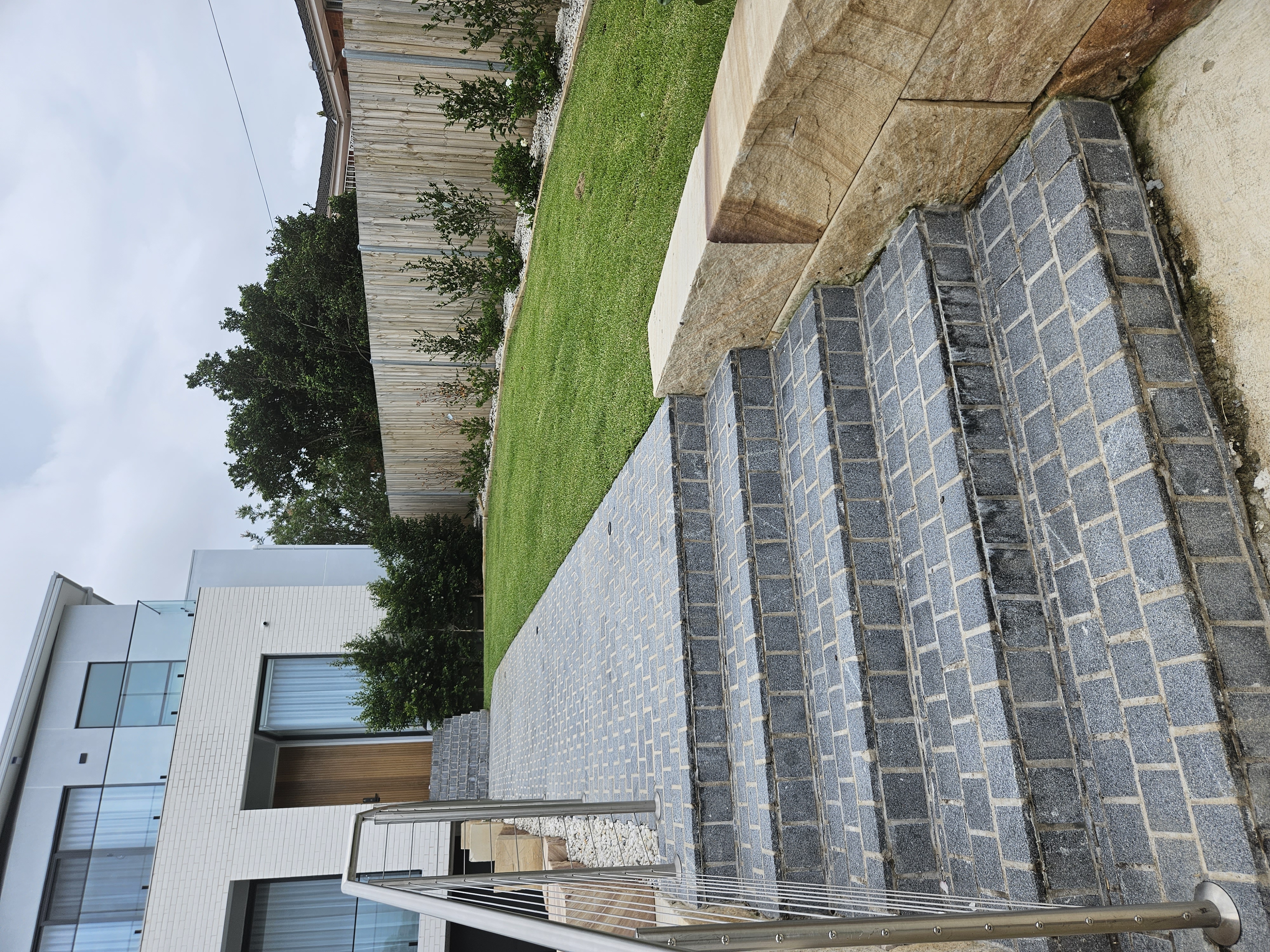
Sandstone is compressed sand. Layers of it, pressed down over millions of years until it turned to rock.
Sydney happens to sit on a massive bed of the stuff. It’s why you see those orange cliffs along the motorway cuttings, why the harbour foreshore looks the way it does, and why so many older houses around here are sitting on sandstone footings. Dig down far enough anywhere in the basin and you’ll hit it.
It’s also why the city looks how it looks. The Town Hall, the QVB, the university quad, the old hospital buildings — all of it came out of quarries nearby and got cut on site. Those warm honey and cream tones people think of as “heritage Sydney” aren’t a design decision anyone made. That’s just the colour of the ground here.
Which is the point, really. Put sandstone out the front of a Sydney house and it doesn’t look like something that got shipped in. It looks like it came out of the ground there. Because more or less, it did.
Why it looks old and new at the same time
People notice this and usually can’t explain it. Here’s what’s going on.
The stone itself is obviously old. You can see the bedding lines in it, the colour shifts from block to block, the fact that it’s clearly rock and not something that came off a production line. No two pieces match. That gives a wall a depth you can’t fake with a manufactured product.
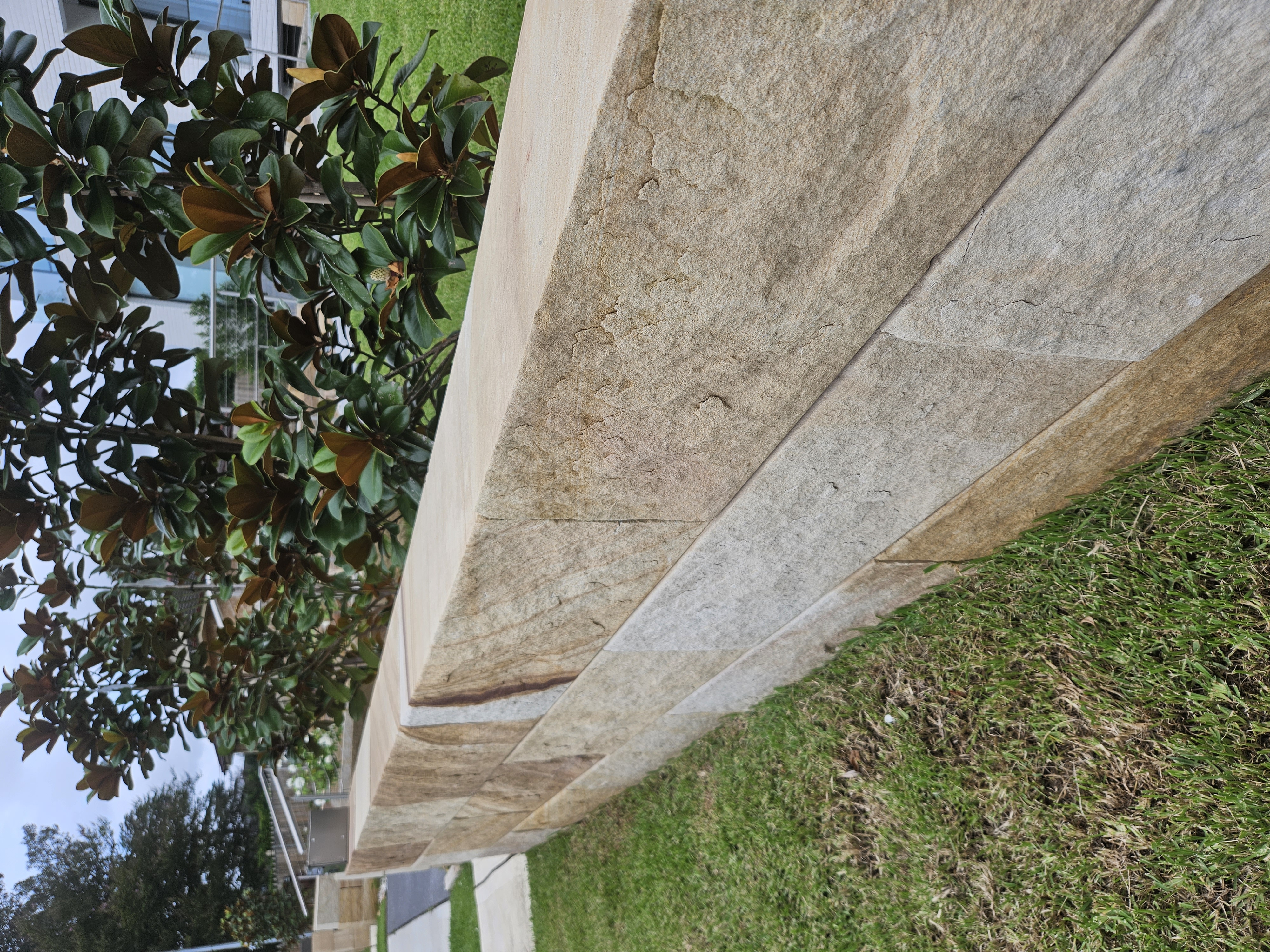
But the shape is entirely up to you. Cut it square, lay it in tight even courses, and it looks sharp and modern. Lay it rougher and more random and it looks like it’s been there a hundred years. Same stone. Completely different wall.
That’s why sandstone works out the front of a renovated modern place without fighting the architecture, and works just as well in front of a federation house. Not many materials can do both.
How it holds up
Sandstone doesn’t rot, doesn’t rust, and termites aren’t interested in it. There’s no replacement cycle — you build it once. Sydney’s sandstone buildings have been standing in this climate for well over a century and they’re fine.
A few things worth knowing before you commit, though:
- It’s porous. Sandstone soaks up water. Usually not an issue in a garden, but it means drainage behind a retaining wall matters, and in some spots sealing is worth a look.
- It’s softer than granite. Sharp edges round off a bit over the decades. Most people reckon that’s an improvement.
- It ages rather than wears out. Sandstone picks up a patina and deepens in colour. It looks better at twenty years than it did at two, which is the opposite of most things you can buy.
- It’s heavy. Solid block needs proper footings and a way to get the stone in. We check both before quoting.
Three ways we use it
Sandstone block walls
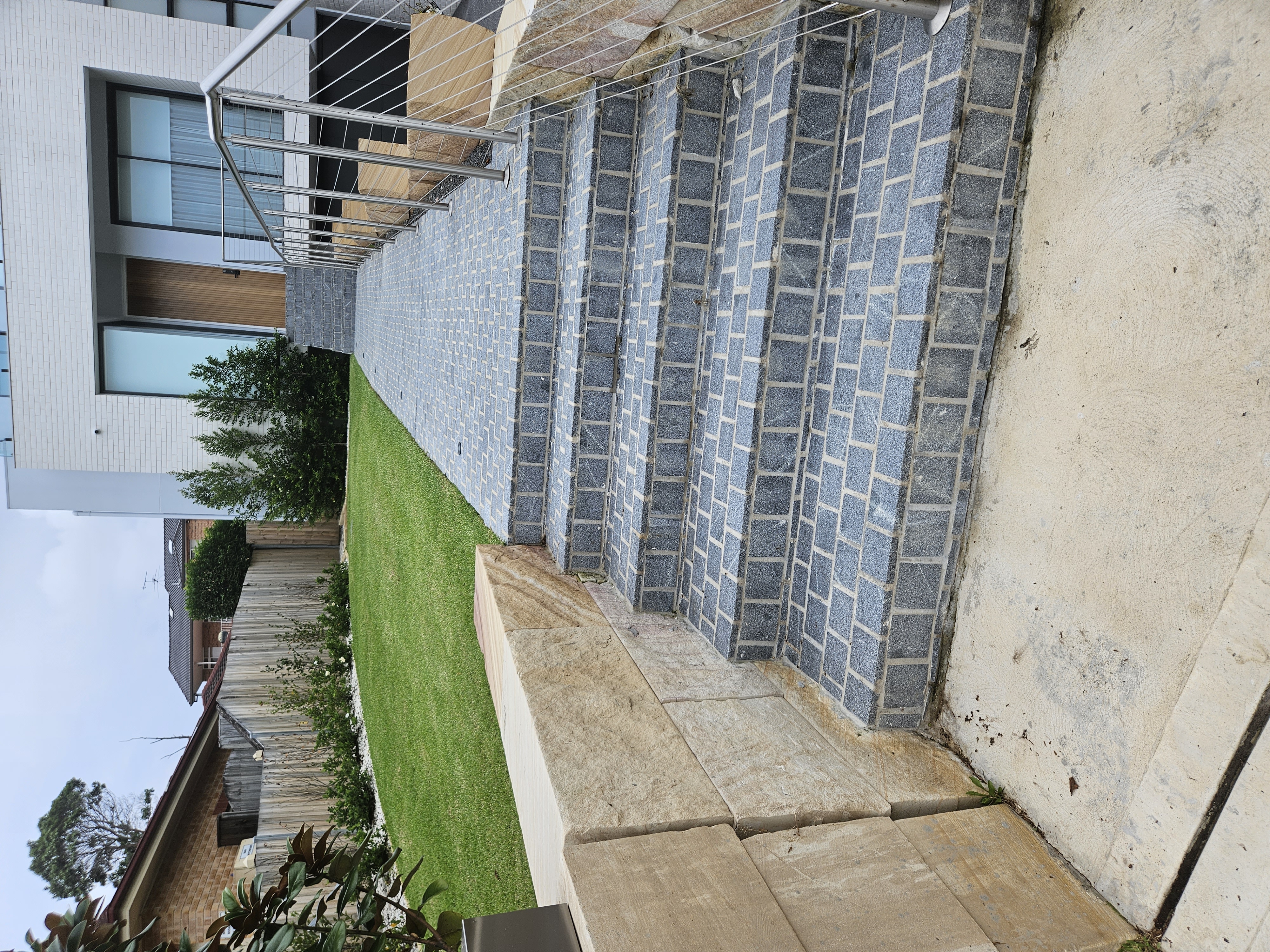
Solid blocks laid as a structural wall — front boundaries, retaining walls, feature walls. Stone all the way through. It’s the most substantial option and it reads unmistakably as the real thing.
Sandstone cladding
A thin sandstone face fixed over blockwork or concrete. Same look, same colour, a fraction of the weight and cost. Good for big areas, for tidying up an existing wall, and for sites where solid block just isn’t practical.
Sandstone garden edging
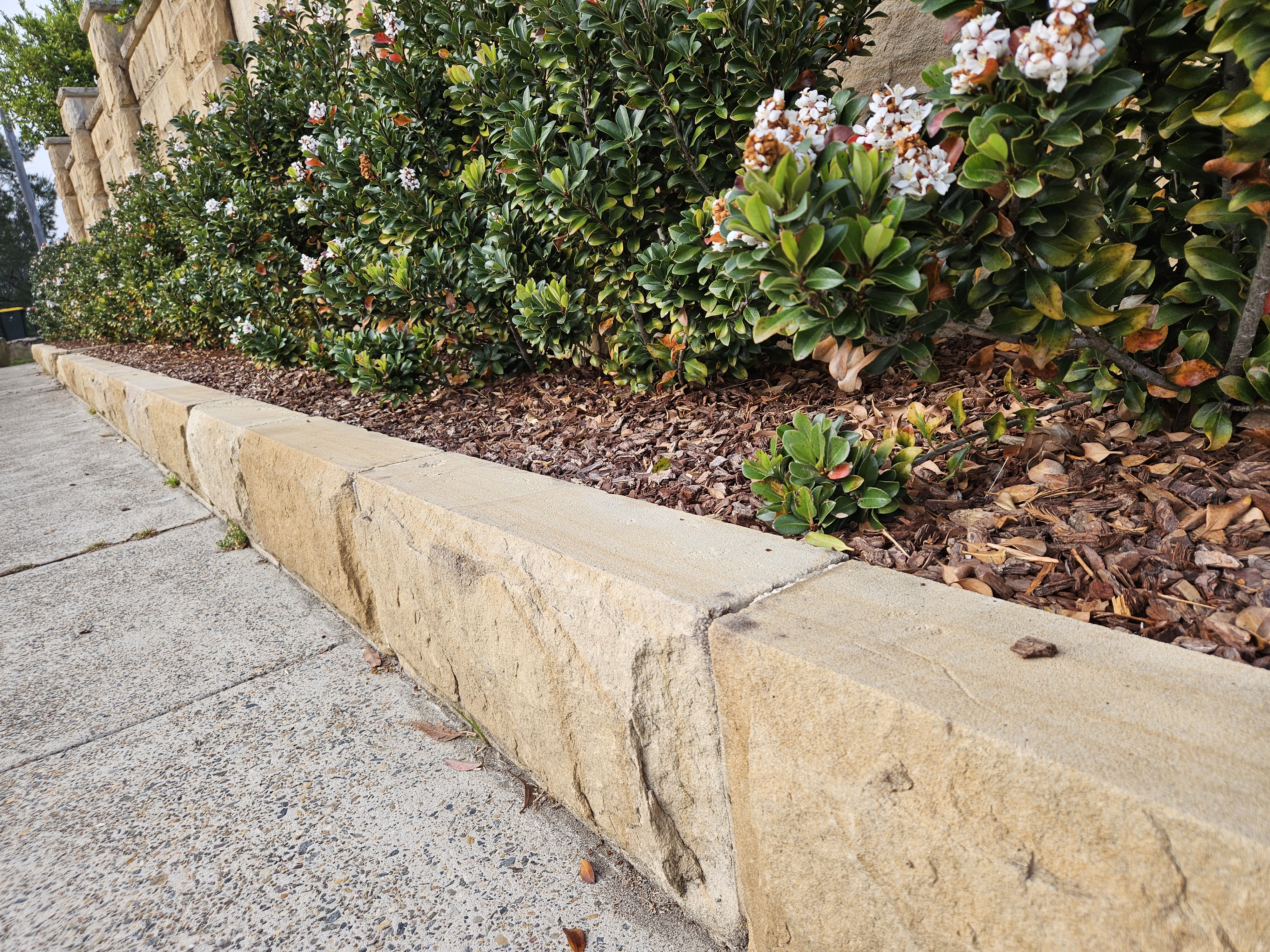
Cut stone used to edge garden beds, paths and lawn. Smaller job than a wall, but it pulls a garden together — especially if there’s already sandstone somewhere on the property.
Not sure which one suits your place?
Send a photo and rough measurements and we’ll tell you. No obligation.
Solid block or cladding?
This comes up on nearly every sandstone job. It comes down to three things.
What the wall has to do
If it’s holding back soil, it has to be structural — so either solid block, or cladding over an engineered blockwork core. If it’s just a face, like a boundary wall or piers or an old wall you want to smarten up, cladding does the same job for less money.
Getting the stone in
Solid sandstone is heavy. Narrow side access, a steep driveway, a tight frontage — all of that affects how the material gets to where it’s going and what that costs. Cladding is much easier on a difficult site.
How much you’re covering
On a small feature wall there’s not much in it. Across a long frontage the difference adds up fast. Cladding covers more ground for the same money, and from the footpath you’d struggle to pick the difference.
We’ll tell you straight which one suits your site. Plenty of jobs where cladding is the better call, and we’ll say so.
Where our stone comes from
Stone isn’t a generic product. Colour, grain and consistency change from quarry to quarry and even batch to batch, so where it comes from matters as much as how it’s laid. We buy through established Australian suppliers rather than whatever’s cheapest that week.
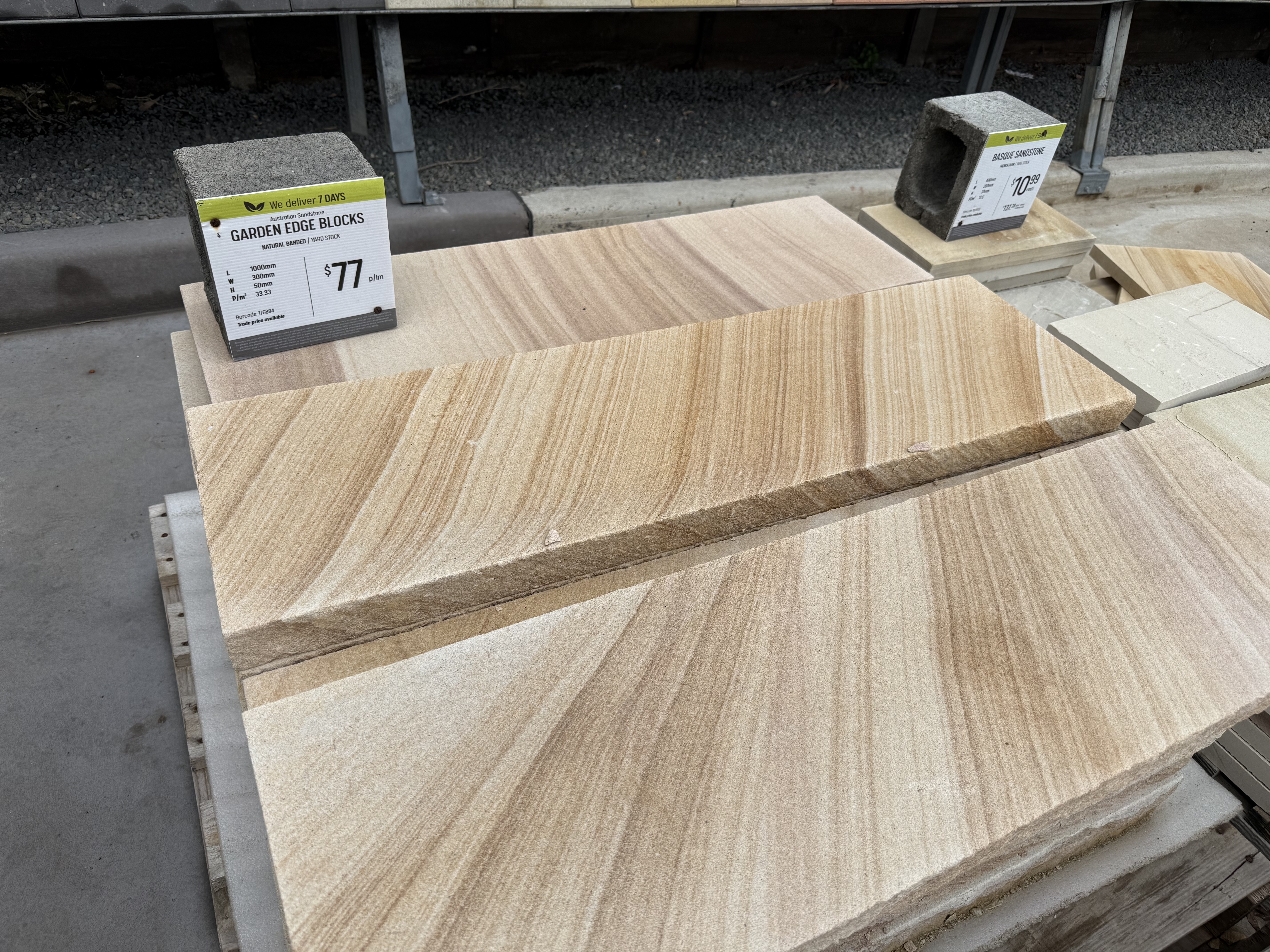
Australian Sandstone
Australian-quarried block for structural and feature walls. Consistent grading and colour, and you know where it came from — which isn’t always true of imported stone.
Amber
Cladding, pavers and finishing products. The range is wide enough to match cladding back to whatever stone, paving or pool surround is already on the property.
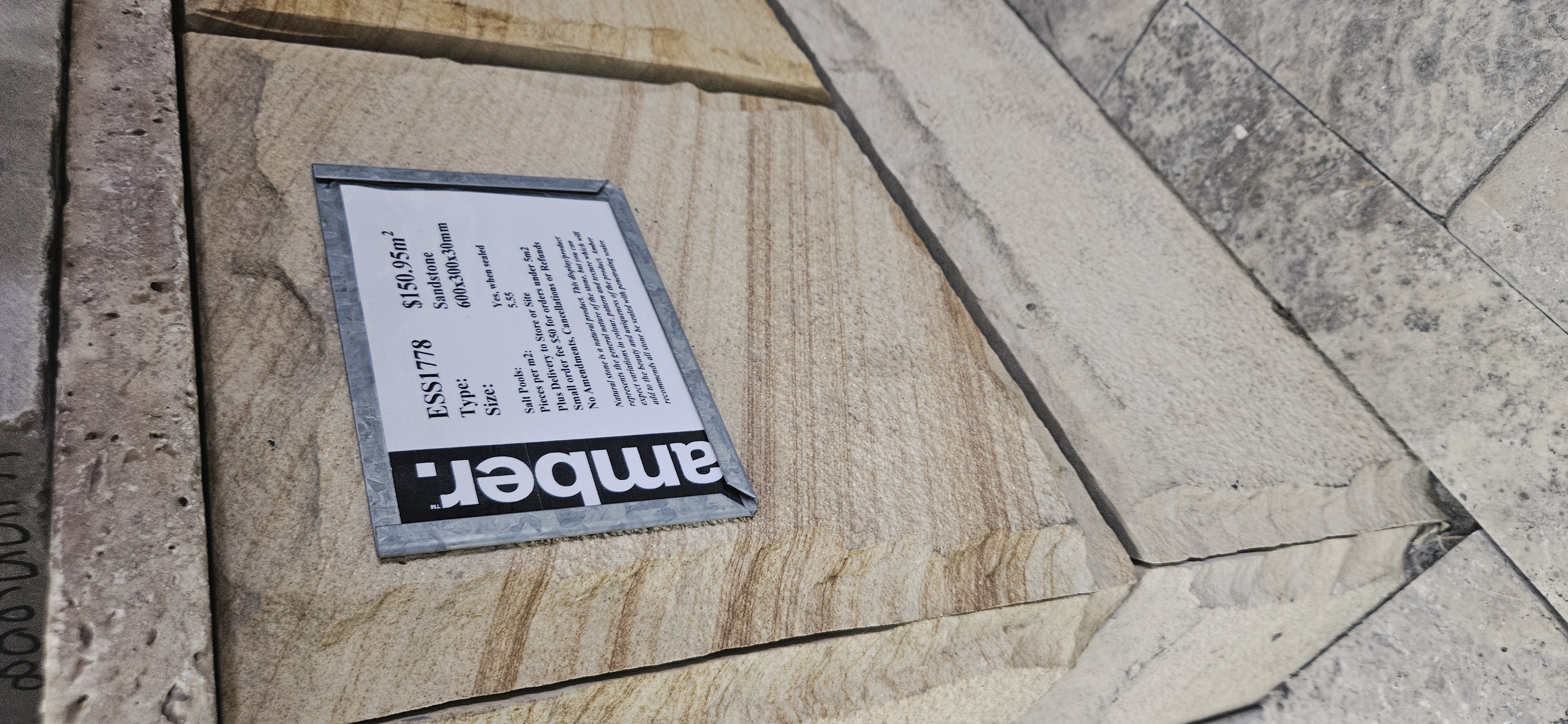
There’s a practical upside to sticking with known suppliers, too. If the wall gets extended later, or a section needs work in ten years, the stone can be traced back to an actual product instead of guessed at.
Sandstone with the rest of the job
Sandstone almost never turns up on its own. It’s usually part of something bigger — doing up a frontage, rebuilding a garden, getting a place ready to sell. It sits well with retaining walls, fencing and landscaping, and we do the lot ourselves rather than you chasing three different trades.
At a glance
- What we build
- Front walls, retaining walls, feature walls, cladding, garden edging
- Finishes
- Sawn and coursed for a sharp modern look, or rough-face for something more traditional
- Colours
- Natural honey, cream and warm grey — varies block to block
- Where we work
- Greater Sydney, based in West Ryde
- Quotes
- Free on-site look and a written price
Thinking about sandstone?
Send us a photo of the area and we’ll tell you whether solid block or cladding makes more sense, and what’s involved. No pressure either way.